Nagoya Gold Medal Recipients
The Nagoya Gold Medal is awarded every year to an organic chemist who has made significant original contributions to the field in its broadest sense.

2025
Prof. Erick M. Carreira(ETH Zurich, Switzerland)
(i) Advances in HAT Catalysis for Olefin Functionalization
(ii) Advances in Asymmetric Catalysis with [Ir] and [Ru] for Synthesis
(iii) New Strategies and Tactics for Synthesis: Merging Total Synthesis and Methodology

2024
Prof. Alois Fürstner (Max-Planck-Institut für Kohlenforschung, Germany)
(i) Formative Encounters with Catalysis
(ii) A New Reactivity Paradigm: trans-Hydrogenation, gem-Hydrogenation & trans-Hydrometalation of Alkynes
(iii) Adventures with Metal-Carbene Chemistry

2020
Prof. Carolyn R. Bertozzi (Stanford University, USA)
(i) Therapeutic opportunities in glycoscience
(ii) Targeted degradation of extracellular proteins with lysosome targeting chimeras (LYTACs)

2018
Prof. David W. C. MacMillan (Princeton University, USA)
(i) Becoming a chemist and organocatalysis
(ii) Photoredox catalysis, fundamentals and early discoveries
(iii) Metallophotoredox and bioconjugation

2017
Prof. E. W. “Bert” Meijer (Eindhoven University of Technology, Nederland)
(i) From Groningen to Eindhoven – a personal journey
(ii) The non-covalent synthesis of functional supramolecular systems
(iii) The amplification of supramolecular chirality

2016
Prof. Stephen Buchwald (Massachusettes Institute of Technology, USA)
(i) Palladium-Catalyzed Carbon-Heteroatom Bond-Forming Reactions
(ii) Cu-Catalyzed Asymmetric Hydrofunctionalization Processes in Organic Synthesis

2015
Prof. Stuart Schreiber (Broad Institute and Harvard University, USA)
(i) Chemistry towards novel mechanism-of-action (nMoA) compounds in therapeutics discovery
(ii) Chemistry and human biology towards cancer therapeutics discovery
2014
Prof. John F. Hartwig (University of California, Berkeley, USA)
(i) Regioselective Functionalization of Alkyl and Aryl C-H Bonds
(ii) Fluoroalkylation and Fluorination

2013
Prof. Ben L. Feringa (University of Groningen, Nederland)
(i) Exploring Chiral Space in Asymmetric Catalysis
(ii) Dynamic Molecular Systems, from switches to motors
2012
Prof. Paul Knochel (Ludwig-Maximilians-Universität, Germany)
(i) Lewis Acid Triggered Reactions of Organometallics
(ii) Recent Advances in Cross-Couplings
2011
Prof. Eric N. Jacobsen (Harvard University, USA)
(i) The Hydrolytic Kinetic Resolution Reaction
(ii) Asymmetric Catalysis with Chiral Hydrogen-Bond Donors
2009
Prof. Jean M. J. Fréchet (University of California, Berkeley, USA)
(i) Designing Macromolecules for Chemo- and Immumo-therapy
(ii) Functional Macromolecules from Catalysis to Organic Electronics
2008
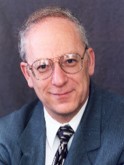
Prof. Barry M. Trost (Stanford University, USA)
(i) Self Assembly of Dinuclear Main Group Catalysts for Asymmetric Synthesis
(ii) Cycloadditions via TMM-Pd Intermediates: New Strategies for Total Synthesis and Asymmetric Induction
2007
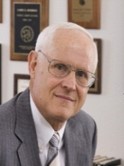
Prof. Larry E. Overman (University of California, Irvine, USA)
(i) Intramolecular Heck Reaction in Natural Products Total Synthesis
(ii) Recent Studies in Asymmetric Synthesis
2006
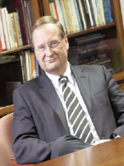
Prof. Steven V. Ley (University of Cambridge, UK)
(i) Natural Product Synthesis: A Stimulus for Discovery
(ii) New Tools for Molecule Makers
2005
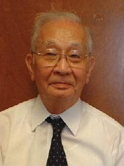
Prof. Koji Nakanishi (Columbia University, USA)
(i) Ginkgolides and Biolobalide
(ii) Bioorganic Studies on Age-Related Macular Degeneration
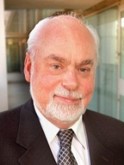
2004
Prof. J. Fraser Stoddart (University of California, Los Angeles, USA)
The Nature of Mechanical Bond
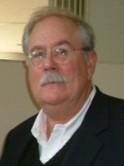
2003
Prof. David A. Evans (Harvard University, USA)
(i) Molecular Complexity: Studies in Natural Products Synthesis
(ii) Molecular Complexity: Studies in Asymmetric Catalysis
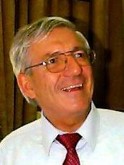
2002
Prof. Dieter Seebach (ETH Zürich, Switzerland)
(i) From Tartaric Acid to TADDOL and Other Diphenylmethanol
Derivatives for Enantioselective Syntheses and Beyond
(ii) From Poly(β-hydroxybutyrates) (PHB) to β-Peptides
Consisting of Homologated Proteinogenic Amino Acids -Chemical and Biological Investigations into a New World
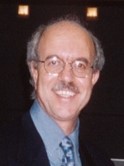
2001
Prof. Kyriacos C. Nicolaou (The Scripps Research Institute, USA)
(i) Total Synthesis in Perspective
(ii) The CP-Molecule Synthetic Labyrinth
2000
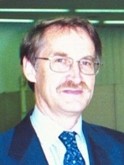
Prof. Manfred T. Reetz (Max-Planck-Institute, Germany)
(i) New Concepts in the Area of Asymmetric Catalysis
(ii) Evolution in the Test Tube as a Means to Create Enantioselective Enzymes
1999
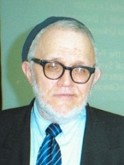
Prof. Samuel J. Danishefsky (Columbia University, USA)
(i) On the Power of Chemical Synthesis
(ii) The Prospects for a Fully Synthetic Anti-Cancer Vaccine
1998
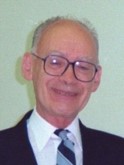
Prof. Henri B. Kagan (University of Paris-Sud, France)
Asymmetric Synthesis –Past, Present and Future
1997
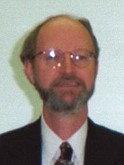
Prof. Robert H. Grubbs (California Institute of Technology, USA)
Synthesis of Materials and Molecules Using Ruthenium Metathesis Catalysts
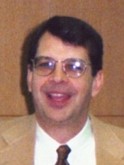
1996
Prof. W. Clark Still (Columbia University, USA)
Synthetic Receptors for Peptides
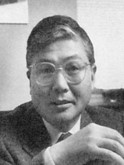
1995
Prof. Yoshito Kishi (Harvard University, USA)
Natural Product Synthesis
Special Awards
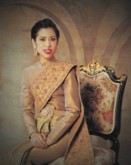
2006
Professor Dr. Her Royal Highness Princess Chulabhorn Mahidol
Recent Investigation of Cytotoxic Natural Products from Thai Plants